Imagine waking up to a beautiful sunny morning, the aroma of freshly brewed coffee fills the air, and you’re ready to start your day. But as you step out of your house, you’re greeted by an unpleasant sight and a putrid smell. The garbage bin, overflowing with organic waste, has become a breeding ground for pests and has attracted unwanted attention from the neighborhood.
Organic waste, such as food scraps and garden trimmings, is a growing concern in our society. Improper waste management not only leads to unsightly surroundings but also has serious environmental consequences. It contributes to the emission of greenhouse gases, compromises water quality, and pollutes the air we breathe.
But there’s a solution to turn this grim scenario into a greener tomorrow – organic waste management. By taking conscious steps to reduce waste at the source and adopting sustainable practices, we can make a significant difference in our environment.
In this article, we will explore the impact of food waste on our planet and delve into the world of composting as a sustainable approach to managing organic waste. Together, let’s discover the green solutions that can help us pave the way towards a cleaner, healthier, and more sustainable future.
The Environmental Impact of Food Waste
Food waste poses significant environmental challenges, contributing to greenhouse gas emissions and causing various negative impacts on the ecosystem. The disposal of food waste consumes a substantial amount of energy due to its high water content. As a result, the environmental consequences of food waste extend beyond the mere discarding of uneaten food.
The disposal process of food waste generates greenhouse gas emissions, primarily methane, a potent contributor to climate change. When food waste ends up in landfills, it decomposes anaerobically, releasing methane gas that is more than 25 times as harmful as carbon dioxide in terms of its global warming potential.1 This contributes to the overall increase in greenhouse gas emissions and further exacerbates climate change.
Furthermore, food waste can contaminate water bodies, leading to the degradation of aquatic environments. The excess organic matter from food waste causes nutrient imbalances in water systems, leading to algal blooms and harmful aquatic conditions. These imbalances can harm aquatic organisms and disrupt the entire ecosystem’s delicate balance.
Reducing food waste is not just about saving money and resources. It’s also about preserving our environment and reducing our impact on climate change. By making conscious choices and adopting sustainable practices, we can make a significant difference in mitigating the environmental impact of food waste.
In addition to emitting greenhouse gases and polluting water bodies, food waste also contributes to unpleasant odors and attracts pests. Rotting food releases pungent odors that can permeate the air, causing discomfort and potential health hazards. Furthermore, food waste acts as a magnet for pests, such as rodents and insects, leading to infestations that pose risks to public health and hygiene, exacerbating the environmental impact of waste disposal.
To mitigate the environmental impact of food waste, it is crucial to prioritize waste reduction at its source. Implementing sustainable practices, such as portion control, meal planning, proper storage, and donation to food banks or charities, can significantly reduce food waste. By taking conscious steps to minimize food waste, individuals, households, and businesses can contribute to a greener future and alleviate the burden on the environment.
The Role of Composting
Composting provides a sustainable approach to effectively manage organic waste, including food waste. It is an environmentally friendly process that converts organic matter into nutrient-rich soil through natural decomposition. Composting helps divert organic waste from landfills, reducing methane emissions and preventing its negative impact on the environment. Instead of contributing to greenhouse gas emissions and pollution, food waste can be transformed into a valuable resource that nourishes the soil and supports plant growth.
Composting also offers additional benefits in terms of soil health and fertility. The resulting compost enhances soil structure, improves water retention, and increases nutrient availability for plants. By incorporating compost into agricultural practices or using it for gardening purposes, we can foster sustainable agriculture, reduce reliance on chemical fertilizers, and promote a healthier ecosystem.
Embracing composting as a part of our waste management practices can significantly contribute to reducing the environmental impact of food waste. By diverting organic waste from landfills and harnessing its potential through composting, we can mitigate greenhouse gas emissions, prevent water contamination, and create a more sustainable future for generations to come.
| Environmental Impact of Food Waste | Solutions |
|---|---|
| Contributes to greenhouse gas emissions | Reduce food waste at the source through portion control and meal planning. |
| Contaminates water bodies | Adopt proper waste management practices, such as composting and responsible disposal. |
| Creates unpleasant odors | Practice proper waste storage and disposal methods to minimize odor production. |
| Attracts pests | Implement effective pest control measures and maintain cleanliness in waste management. |
By actively addressing the environmental impact of food waste and adopting sustainable practices, we can contribute to a healthier and greener planet. Together, let’s strive towards a more sustainable future.
(Word count: 540)
1 Food and Agriculture Organization of the United Nations (FAO), “Climate Change and Food Systems: Global Assessments and Implications for Food Security and Trade”, 2015.
Composting as a Sustainable Approach
Composting is a biodegradation method that converts organic matter, including food scraps and leaves, into nutrient-rich soil. It offers several benefits in managing organic waste:
- 1. Environmentally Friendly: Composting is an environmentally friendly way to dispose of organic waste. Instead of adding to landfills, where organic waste can release harmful greenhouse gases, composting allows for the natural decomposition of organic matter into nutrient-rich soil that can be used for gardening or agriculture.
- 2. Reduce Greenhouse Gas Emissions: By diverting organic waste from landfills and promoting composting, we can significantly reduce greenhouse gas emissions. When organic matter decomposes in landfills, it produces methane, a potent greenhouse gas. Composting eliminates the production of methane by facilitating controlled decomposition.
- 3. Nutrient-Rich Soil: Composting creates high-quality organic fertilizer. The resulting compost is rich in essential nutrients, such as nitrogen, phosphorus, and potassium, which are vital for plant growth. Using compost in gardens or agricultural fields improves soil structure, enhances water retention, and reduces the need for chemical fertilizers.
“Composting is a natural process that mimics nature’s way of recycling organic matter. It is a simple and effective method to manage organic waste while benefiting the environment.”
By embracing composting as a sustainable approach to managing organic waste, we can make significant strides towards a greener future. It not only reduces the environmental impact of organic waste but also contributes to soil health and fertility.
Composting Process:
The composting process involves creating an optimal environment for organic matter to decompose. Here are the general steps to follow:
- 1. Collect green and brown materials: Green materials such as fruit and vegetable scraps, coffee grounds, and grass clippings provide nitrogen-rich components, while brown materials like leaves, straw, and shredded cardboard offer carbon-rich materials.
- 2. Balance the ratio: Achieve a balanced carbon-to-nitrogen ratio in your compost pile or bin. Aim for approximately 25-30 parts carbon for every one part nitrogen. This balance ensures proper decomposition and prevents odors or pests.
- 3. Layer and moisten: Alternate layers of green and brown materials, ensuring that each layer is adequately moist. Moisture allows the decomposition process to occur efficiently.
- 4. Turn the pile: Regularly turn or mix the compost pile every few weeks to promote aeration and accelerate decomposition. This step helps achieve a faster breakdown of organic materials.
- 5. Wait and monitor: Allow the compost pile to decompose over time, typically several months to a year. Monitor the moisture level and temperature, making adjustments as needed.
- 6. Use the compost: Once the compost has transformed into a dark, crumbly material with an earthy aroma, it is ready to use. Apply it to gardens, lawns, or potted plants to enrich the soil and support healthy plant growth.
| Benefits of Composting | Benefits of Composting |
|---|---|
| 1. Reduces landfill waste and methane emissions | 1. Improves soil fertility and structure |
| 2. Diverts organic waste from incinerators | 2. Enhances water retention in soils |
| 3. Creates nutrient-rich soil amendment | 3. Reduces the need for chemical fertilizers |
| 4. Minimizes odors and vermin attracted to organic waste | 4. Promotes sustainable agriculture |
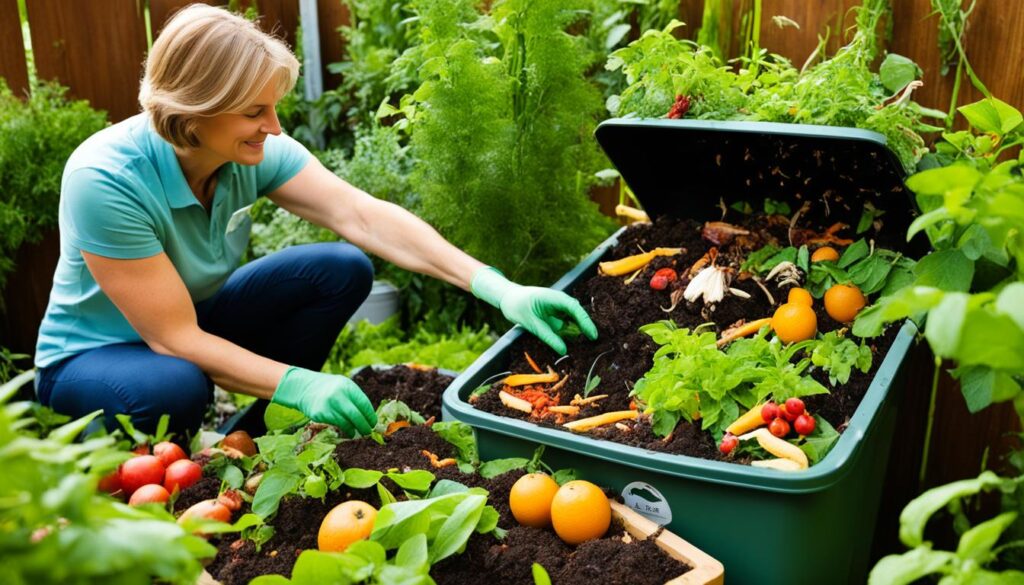
Composting is a natural solution to manage organic waste while contributing to a more sustainable and environmentally-friendly future. By adopting composting practices, we can reduce greenhouse gas emissions, protect our ecosystems, and create healthier soils for future generations.
Conclusion
Managing organic waste is essential for creating a greener and more sustainable future. By addressing the issue of food waste at its source and implementing composting practices, we can effectively minimize the environmental impact of organic waste.
Composting offers a viable solution by diverting organic waste from landfills. This not only reduces greenhouse gas emissions but also prevents contamination of our surroundings. Additionally, the compost produced through this process enriches soil and enhances its fertility, contributing to a more sustainable waste management system.
By adopting these measures, we can play an active role in protecting the environment for future generations. Let’s join together in the green revolution and make a difference in achieving a greener future through sustainable waste management practices like composting.