Every day, I find myself standing in front of an overflowing trash can, feeling guilty about the amount of plastic packaging waste I’m contributing to the environment. It’s disheartening to think about the impact all this waste has on our planet, from polluting our oceans to endangering wildlife. But then I realized that I have the power to make a change, starting with reducing food packaging waste.
According to statistics, if current trends continue, there could be a staggering 12 billion metric tons of plastic in the world by 2050. That’s a future I don’t want to see, and I’m sure you don’t either. So, I set out on a mission to find practical tips that could help me live a more sustainable lifestyle and reduce my contribution to the growing plastic waste crisis.
Join me on this journey as we explore simple yet effective strategies to cut down on food packaging waste. Together, we can make a positive impact on the environment and embrace a more sustainable future.
Saying No to Plastic Bags
One effective way to reduce packaging waste is to say no to plastic bags. Disposable plastic bags are a major threat to the environment, and a large number of them end up polluting the soil and oceans.
By bringing your own reusable bags made of cloth or jute when shopping, you can minimize the use of plastic bags. These eco-friendly alternatives not only help protect the environment but are also durable and stylish.
In addition to cloth and jute bags, you can also consider using eco-friendly paper bags as an alternative to plastic bags. These paper bags are biodegradable and can be recycled, making them a more sustainable choice.
Another way to reduce packaging waste is to opt not to use a bag when unnecessary. If you are purchasing items that are already packaged or can be carried without a bag, it’s best to choose the option that minimizes unnecessary waste.
Overall, by saying no to plastic bags and embracing eco-friendly alternatives, you can make a significant contribution to reducing packaging waste and creating a more sustainable future.
Use Glass Containers and Jars Instead of Plastic
One of the most effective ways to create an eco-friendly kitchen and reduce food packaging waste is by choosing glass or paper packaging over plastic. Plastic packaging is a major contributor to environmental pollution, and opting for alternative materials can make a significant impact.
When grocery shopping, consider purchasing loose produce instead of pre-packaged items. This not only helps to minimize packaging waste but also allows you to select the exact quantity you need. Additionally, buying items such as grains, lentils, and vegetables in bulk can help avoid excessive plastic packaging.
Using glass containers and jars for storage is another sustainable packaging alternative. Glass is a recyclable material that doesn’t leach harmful chemicals into your food. Opt for air-tight glass jars to store leftovers, pantry staples, and homemade snacks. You can easily find a variety of glass containers and jars in different sizes to suit your needs.
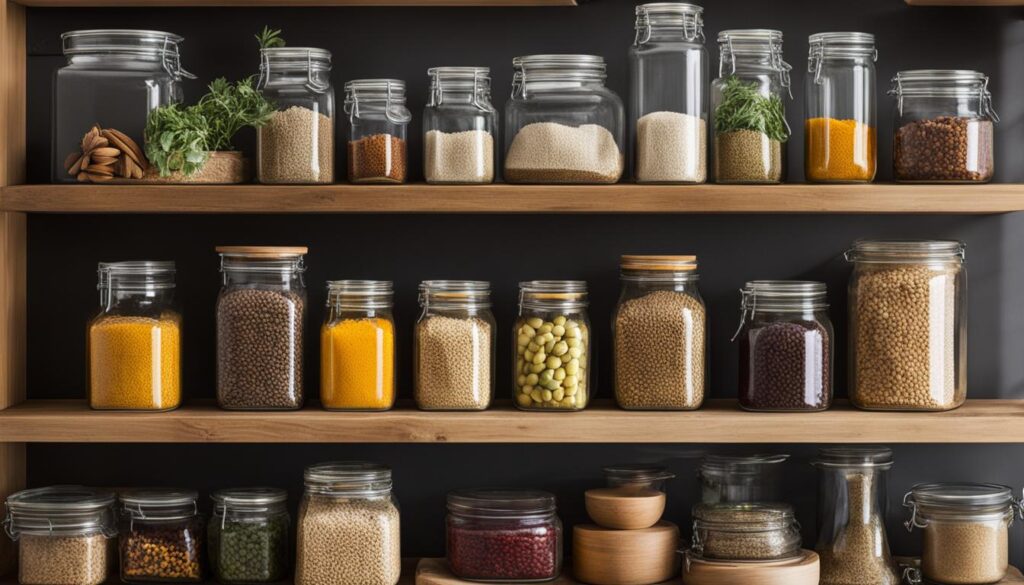
Benefits of Using Glass Containers and Jars:
- Reduced plastic waste: By using glass containers and jars, you can significantly reduce your reliance on plastic packaging.
- Preservation of food quality: Glass containers provide an airtight seal, helping to maintain the freshness and flavor of your stored food items.
- Eco-friendly and recyclable: Glass is a sustainable material that can be recycled endlessly without losing its quality. Recycling glass also saves energy and reduces carbon emissions.
- Non-toxic storage option: Unlike plastic containers, glass does not contain harmful chemicals that can leach into your food.
Another way to minimize packaging waste is by using washable and reusable bags for storing food. These bags are durable and can be easily cleaned, making them a sustainable alternative to single-use plastic bags. Similarly, carrying your own container for takeaways can help reduce the use of disposable food containers and contribute to a more sustainable lifestyle.
Embracing these simple changes in your kitchen can have a significant impact on reducing food packaging waste. By choosing glass containers and jars, opting for bulk purchases, and using reusable bags and containers, you are taking an important step towards a greener and more sustainable future.
Other Tips for Reducing Food Packaging Waste
When it comes to waste management and embracing a sustainable lifestyle, there are several practical tips that can go a long way in reducing food packaging waste.
One effective way is to pack home-cooked lunches in reusable containers instead of relying on disposable ones. By doing so, we can significantly cut down on the amount of single-use packaging that ends up in landfills.
Another simple step is to opt for metal cutlery or reusable paper plates, rather than using plastic cutlery. By making this switch, we can reduce the demand for disposable plastic utensils, which take hundreds of years to decompose.
Furthermore, shifting towards a more plant-based diet can also have a positive impact on waste reduction. Animal agriculture not only contributes to greenhouse gas emissions but also requires significant packaging for meat products. By incorporating more plant-based meals into our diet, we can help minimize the environmental impact associated with meat production and packaging.
Additionally, proper waste management plays a crucial role. Composting and recycling biodegradable and paper products are essential practices that can help divert waste from landfills. This way, we can reduce the overall volume of packaging waste and promote a circular economy.
By following these tips, we can all play our part in waste management, embrace a sustainable lifestyle, and contribute to the preservation of our environment.