Imagine walking into a bakery early in the morning, greeted by the enticing aroma of freshly baked pastries. The display case is filled with an array of delectable treats, carefully crafted and beautifully presented. As you take a bite of a flaky croissant or savor a velvety slice of cake, you wonder: what is the secret behind these bakery-quality creations?
The answer lies in the techniques and tips mastered by professional bakers. From the careful sifting of dry ingredients to the artful shaping of whipped cream, these culinary experts have honed their skills to create baked goods that are truly extraordinary.
Important Tips for Baking Success
When it comes to baking, there are several important tips that can make a significant difference in your results. By following these key guidelines, you can elevate your baking game and achieve outstanding outcomes:
1. Measure Properly:
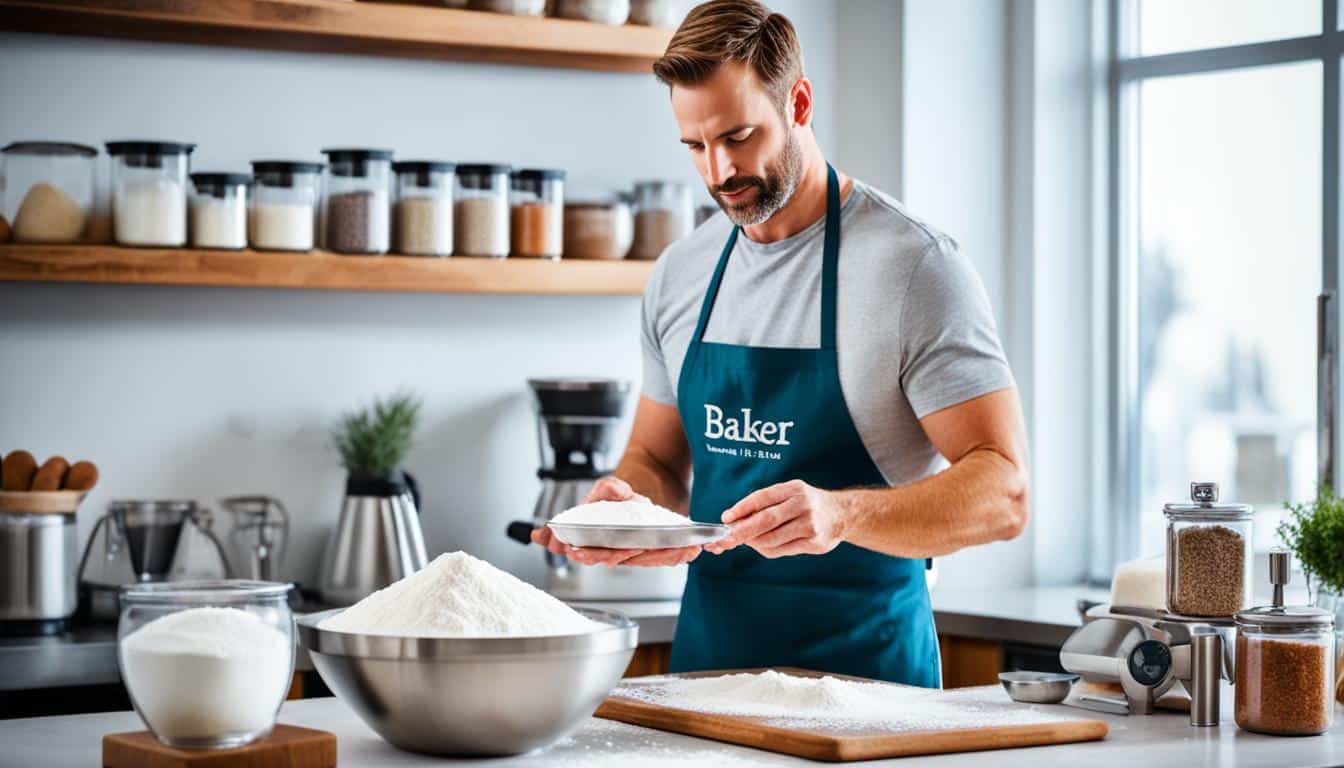
Accurate measurements are essential for a successful bake. Investing in a digital scale ensures precise measurements, but if one isn’t available, use the spoon and level method for dry ingredients. This guarantees accuracy and consistency in your recipes.
2. Use Room Temperature Ingredients:
Using ingredients at room temperature is crucial for optimal baking results. Cold butter cannot be creamed properly, and cold eggs can result in an uneven texture in the batter. So, remember to bring your ingredients to room temperature before getting started.
3. Check Oven Temperature:
Regularly checking and maintaining the correct oven temperature is vital for even baking. Invest in an oven thermometer to ensure accuracy. Avoid opening the oven door frequently during baking, as it can cause temperature fluctuations and affect the final product.
4. Understand Leavening Agents:
Knowing the difference between baking powder and baking soda and their activation requirements is crucial. Baking powder is a combination of an acid and a base and activates when combined with moisture. Baking soda requires an acid to activate. Understanding these agents ensures the right leavening effect in your baked goods.
5. Use a Light Hand:
When mixing ingredients, it’s important to use a light hand and avoid overmixing. Overmixing can lead to gluten development in flour-based recipes, resulting in a tough and dense texture. Mix until the ingredients are just combined for the best results.
6. Prepare Baking Pans Properly:
Properly preparing baking pans ensures effortless removal of your baked goods. Use parchment paper or nonstick foil to line the pans, preventing sticking and ensuring easy cleanup. This step is especially important for delicate recipes like cakes and cookies.
7. Use Quality Ingredients:
The quality of your ingredients plays a significant role in the taste and texture of your baked goods. Invest in high-quality ingredients, such as King Arthur Flour for superior structure and Unsalted Land O’ Lakes butter for consistent results. Using quality ingredients can truly make a noticeable difference in the final product.
By incorporating these important tips into your baking routine, you’ll enhance your skills and achieve baking success. Remember, precision, preparation, and quality ingredients are the pillars of excellent baking.
Becoming a Baking Pro
To truly become a baking pro, it is essential to understand the science behind baking. It’s not enough to simply follow a recipe; knowing why certain ingredients and techniques work is the key to achieving consistent and delicious results. The science behind baking encompasses a variety of factors, from the chemical reactions that occur during mixing and baking to the precise functions of each ingredient.
Fortunately, there are numerous resources available to expand your baking knowledge and delve deeper into the science. Online platforms, such as baking blogs and websites, offer a wealth of information on the subject. These platforms provide insights into ingredient functions, explain the chemical reactions that result in specific textures and flavors, and offer troubleshooting tips to overcome common baking challenges.
In addition to online resources, taking baking classes or workshops can provide hands-on experience and expert guidance from experienced bakers. These classes often focus on the science behind baking, allowing you to develop a deeper understanding of the processes and techniques involved. The opportunity to ask questions and receive immediate feedback from instructors can be invaluable in honing your skills.
Books dedicated to the science of baking are another valuable resource. These comprehensive guides delve into the intricacies of baking, covering everything from the role of proteins and starches to the function of leavening agents. With in-depth explanations and step-by-step instructions, these books offer a wealth of knowledge for aspiring bakers.