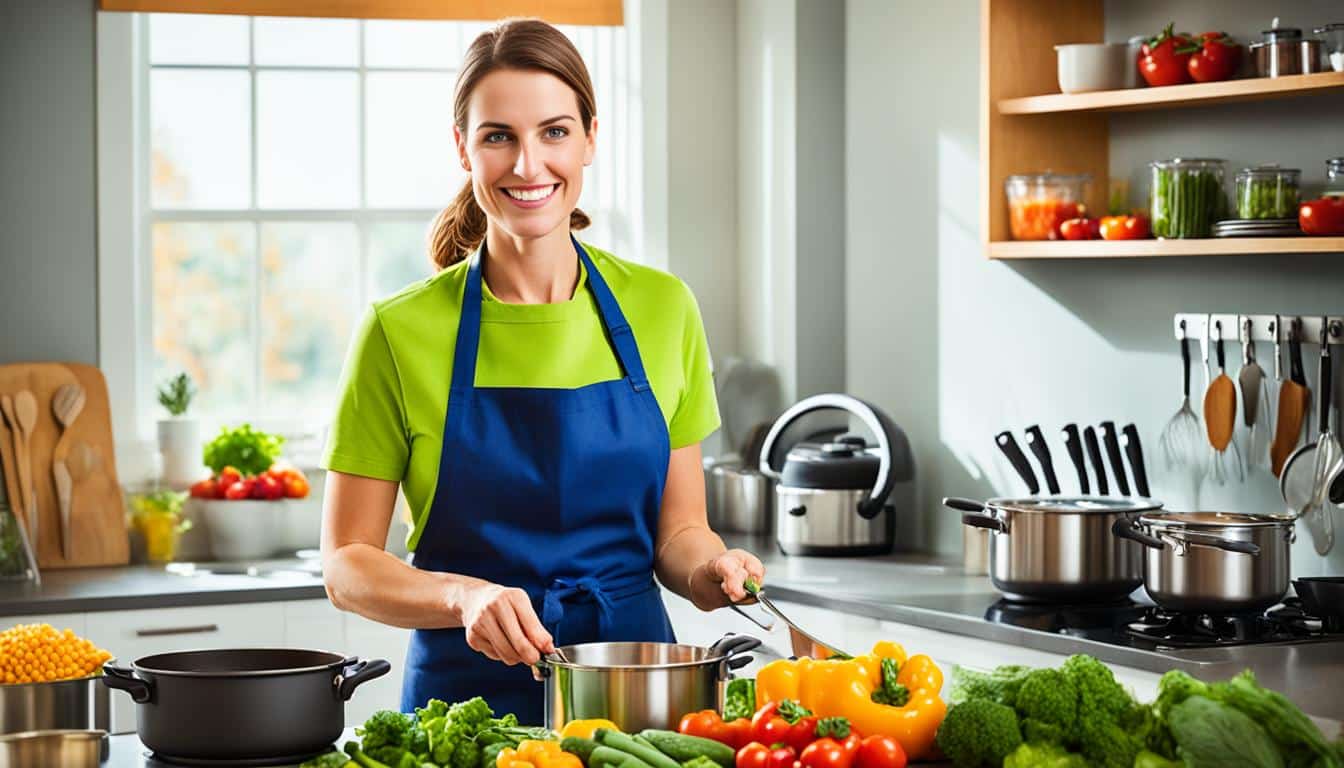
As the leaves begin to change color and the air turns crisp, I find myself eagerly anticipating the bountiful harvest of my backyard garden. There’s nothing quite like the satisfaction of growing your own food and savoring the flavors of the season. But as any gardener knows, there’s often a surplus of produce that needs to be preserved.
That’s where food preservation methods come in. From canning and freezing to drying, these techniques offer a way to extend the life of our harvest and ensure that none of it goes to waste. They not only help us enjoy the fruits of our labor throughout the year but also contribute to sustainable storage practices.
One summer, I found myself with an abundance of tomatoes. Determined not to let them go to waste, I decided to try my hand at canning. After all, I had heard stories of grandmothers preserving their garden’s bounty in jars that would last for years.
I gathered the necessary equipment – jars, lids, a canner – and began the process. The scent of ripe tomatoes filled my kitchen as I carefully peeled and chopped them, following the canning recipe. The hot water bath sealed the jars, producing that satisfying pop sound that signaled success.
Months later, as winter arrived and snow covered my garden, I ventured into my pantry to retrieve a jar of those preserved tomatoes. Their vibrant red color and rich aroma instantly transported me back to the warm days of summer. In that moment, I realized the true value of food preservation methods.
Whether it’s canning, freezing, or drying, these techniques allow us to capture the essence of each season and enjoy the flavors of our harvest all year round. They not only provide us with sustenance but also foster a connection to the land and a respect for the hard work that goes into growing food.
So, let’s dive deeper into the world of food preservation methods and explore how we can make the most of our harvest while reducing food waste and supporting a sustainable lifestyle.
Canning: A Step Back in Time for Sustainable Pantries
Canning is a traditional method of food preservation that allows me to enjoy seasonal ingredients throughout the year. It is a way to honor history and simplify my life while supporting local farmers. By preserving ingredients through canning, I can create a sustainable pantry that provides me with a variety of delicious options.
There are three main methods of canning: pressure canning, water bath canning, and atmospheric steam canning. Each method is suited for different types of foods and requires specific equipment and instructions.
Pressure Canning
Pressure canning is necessary for low-acid vegetables and meats to prevent the growth of harmful bacteria like botulism. To ensure safe preservation, a pressure canner is required. This specialized equipment reaches the appropriate temperature and pressure needed to kill any potential bacteria.
Water Bath Canning
Water bath canning is suitable for high-acid foods like fruits, tomatoes, and pickles. This method involves submerging the jars in boiling water to create an airtight seal. The heat from the boiling water kills any bacteria and creates a safe environment for preservation.
Atmospheric Steam Canning
Atmospheric steam canning is a newer method that has been approved for high-acid foods. It utilizes steam to reach the same temperature as boiling water for preservation. This method requires less water and energy compared to traditional boiling water canning, making it a more sustainable option.
Incorporating canning into my food preservation routine not only allows me to enjoy the flavors of the season year-round but also helps me reduce food waste and support local farmers. With the right equipment and proper instructions, canning becomes an enjoyable and rewarding activity that adds to the sustainability of my pantry.
Freezing and Drying: Preserving Flavor and Nutrients
When it comes to food preservation, freezing and drying are two highly effective methods that can help you retain the flavor and nutritional value of your food. Whether you have a surplus of vegetables from your garden or you want to extend the shelf life of fresh produce, these preservation techniques offer convenient and sustainable solutions.
Freezing: Retaining Freshness and Versatility
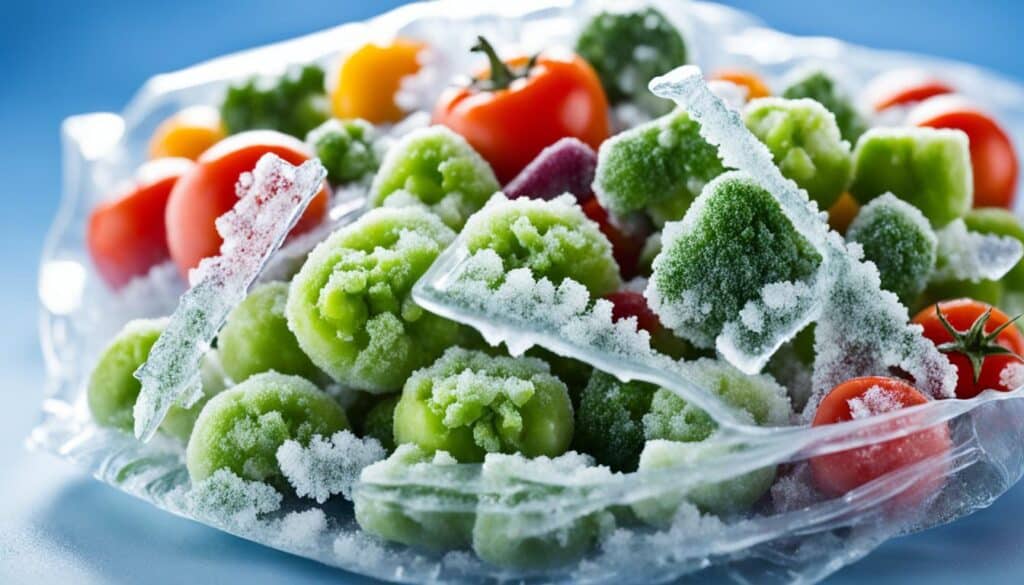
Freezing is an excellent way to preserve a wide range of fruits and vegetables, allowing you to enjoy their freshness and versatility throughout the year. To freeze vegetables, it is essential to blanch them first. Blanching involves briefly submerging the vegetables in boiling water and then quickly transferring them to an ice bath to halt enzymatic activity. This process helps preserve the color, texture, and flavor of the vegetables while also preventing the loss of key nutrients.
Once blanched, the vegetables can be packed into airtight containers or freezer bags and stored in the freezer. Freezing not only extends the shelf life of the vegetables but also maintains their nutritional value. Leafy greens, beans, berries, and other produce can be easily frozen and later used in soups, stir-fries, smoothies, and other recipes.
Drying: Removing Moisture for Long-Term Storage
Drying, also known as dehydration, is another popular method of food preservation. By removing the moisture from food, drying inhibits the growth of bacteria and molds, allowing for long-term storage without the need for refrigeration.
There are several ways to dry food, including using a food dehydrator, oven, or microwave. Fruits, vegetables, and herbs are commonly dried as they retain their flavor and nutrients even after the drying process. Dehydrated foods can be stored for up to a year when stored in airtight containers or vacuum-sealed bags.
Dehydrated fruits can be enjoyed as a healthy snack, added to baked goods, or rehydrated for use in various recipes. Dried herbs can be crushed and used in homemade spice blends or infused into oils and vinegars for added flavor.
Both freezing and drying are convenient methods of food preservation that help reduce food waste by allowing you to make the most of your harvest. Whether you choose to freeze your favorite vegetables for future use or dry fresh fruits and herbs for long-term storage, these techniques ensure that you can enjoy the flavors of your garden all year round.
Conclusion
Food preservation methods such as canning, freezing, and drying are crucial for sustainable storage and reducing food waste. By preserving the flavors of the season, we can enjoy fresh ingredients throughout the year and support local farmers. Canning allows us to create a sustainable pantry, filled with shelf-stable foods that can feed us for months or even years. It not only honors history but also reduces our reliance on store-bought produce, helping to minimize our environmental impact.
Freezing and drying also play an important role in preserving the flavor and nutritional value of food. Freezing blanched vegetables and fruits allows us to extend their shelf life and explore versatile recipe options. Additionally, drying or dehydrating food removes moisture, allowing us to store dried fruits and herbs for up to a year while retaining their flavor and nutrients.
Incorporating food preservation into our routine is a smart and responsible way to ensure a steady supply of fresh, nutritious food. By reducing our food waste and making the most of our harvest, we not only save money but also contribute to a more sustainable future. Let’s embrace these food preservation methods and take a step towards a greener and more efficient approach to our food consumption.